

A FORWARD perspective ahead of Carlo Magni’s Asia Fruit Logistica session on nuts and dried fruit
Nuts and dried fruit are no longer just seasonal gifts, pantry staples or background ingredients. Across Asia, and especially in China, they are becoming a powerful lens into how consumers are rethinking health, snacking, premiumization and everyday convenience.
That is the theme Carlo Magni will explore at Asia Fruit Logistica, where FORWARD will share new thinking on what is driving growth in the nuts and dried fruit category — and how industry can unlock the next wave of opportunity in a fast-changing consumer landscape.
Globally, this is already a category of scale. Peanuts remain the largest segment, tree nuts are forecast to be among the fastest-growing, and dried fruit — while smaller — has strong potential as both a partner to nuts and an ingredient platform. Asia is central to the story. It already accounts for a major share of global tree nut demand, while Asia-Pacific is expected to be one of the strongest growth regions through to 2030.
China illustrates the opportunity particularly clearly. It is already the world’s largest tree nut market by volume, yet per capita consumption remains far below markets such as South Korea and the United States. Only a relatively small proportion of Chinese consumers are meeting daily dietary guidelines for nut consumption. In commercial terms, that gap is not a weakness; it is headroom.
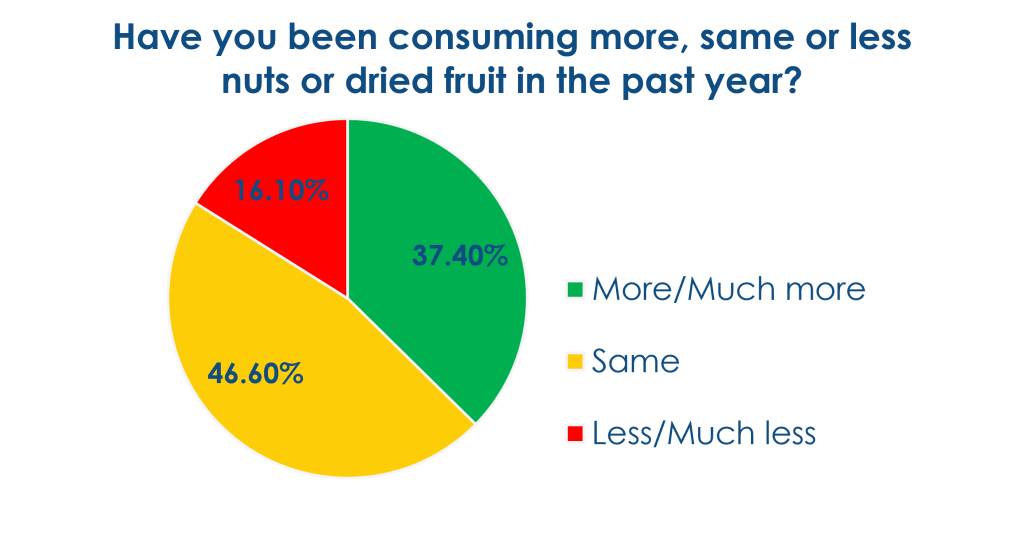
FORWARD’s Fresh Tracker research shows positive momentum. Chinese consumers report eating more nuts and dried fruit than a year ago, with the highest frequency among those aged 30 to 49. Most still consume the category only a few times per week rather than every day, suggesting that the biggest prize is not simply penetration, but habit formation.
What is driving that shift? The answer is not health alone. In China, consumers tell us that taste and enjoyment are the leading reasons for eating more nuts and dried fruit, closely followed by health and wellbeing. This balance matters. Nuts win when they combine a desirable eating experience with credible benefits: protein, healthy fats, natural energy, nutritional density, convenience and long shelf life.

We are also seeing signs of trading up. Peanuts remain the most purchased option, but pistachios, cashews, and macadamias are increasingly prominent among consumers who eat nuts more often. That points to a more premium, more experiential category — one where flavor, format, provenance, brand trust, and digital storytelling all have a role to play.
For brands and growers, the future opportunity is clear. Nuts and dried fruit need to move from occasional consumption to everyday wellness snacking; from bulk formats to more convenient, portioned and ready-to-eat solutions; from generic health cues to clear, substantiated benefit stories; and from shelf presence alone to social, e-commerce and content-led discovery.
The category also has room to grow beyond snacking, as an ingredient in plant-based beverages, dairy alternatives, breakfast products, bars, bakery products, sports nutrition, and other food platforms.

Peanuts can continue to benefit from penetration and protein. Tree nuts can lead with premium health and experience. Dried fruit can grow through pairing, flavor, and broader use as an ingredient.
At AFL, Carlo’s session will invite the industry to view nuts and dried fruit not as a niche but as a category at the intersection of produce, FMCG, health, and modern snacking. The opportunity is there. The next challenge is to turn consumer momentum into daily habits, stronger brands, and more valuable growth.
~ Carlo